
A Chicago storm can pass in twenty minutes and leave behind a roofing problem that lasts for months.
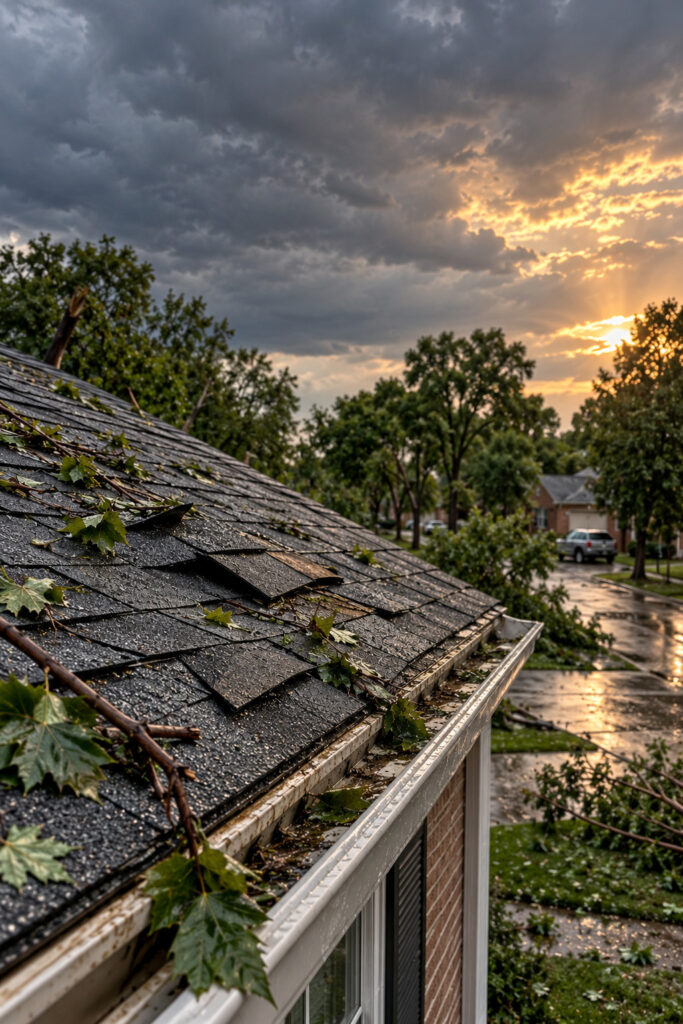
Strong wind may lift only a few shingles. Hail can damage the surface without creating an immediate leak. A falling branch can puncture roofing in one small area. Flashing can pull loose around a chimney while the rest of the roof still looks perfectly normal from the ground.
And sometimes the first sign of storm damage does not appear until the next rain.
JZ Roofing of Chicago provides storm damage roof repair for homes and properties throughout Chicago and the surrounding suburbs. We evaluate storm-damaged roofing, locate vulnerable areas, repair leaks, replace damaged materials, and help property owners determine whether the roof needs localized repair or more extensive work.
If your roof was exposed to strong winds, hail, falling debris, or severe weather, do not rely only on what you can see from the sidewalk.
Call JZ Roofing at 773-930-4422 to schedule a storm damage roof evaluation and free estimate.
It is easy to assume that a roof survived a storm simply because there is no water dripping from the ceiling.
Unfortunately, storm damage is not always immediate or obvious.
A shingle can be loosened without blowing completely off. Flashing may shift just enough to create a path for water during the next heavy rain. Hail can weaken the protective surface of asphalt shingles. A branch can scrape, crack, or puncture roofing without leaving dramatic damage visible from below.
Even a small opening matters because the roof is designed as a complete water-shedding system.
Some conditions need immediate attention. Others should be repaired before the next storm turns a minor weakness into an active leak.
Storm-related problems may include:
This is one of the most important things to understand after a storm.
No leak does not necessarily mean no damage.
Water enters a building only after it finds a complete path through the roofing system. A storm may create the first part of that path without producing an immediate ceiling stain.
For example, wind may loosen a shingle today. The first rainfall may not enter beneath it. After additional wind, temperature changes, and repeated rainfall, the opening may become larger.
By the time a stain appears indoors, water may already have affected materials above the ceiling.
That is why it can make sense to have the roof evaluated after unusually strong weather even when the interior still appears dry.Not all storm damage looks the same.
The type of weather that passed through your neighborhood can provide useful clues about what should be checked.
Wind does not have to remove an entire section of roofing to cause a problem.
Strong gusts can work beneath shingle edges and break or weaken their seal. Once a shingle has lifted, it may no longer perform as intended even if it settles back into approximately the same position.
Wind can also affect:
One missing shingle is easy to notice. Several loosened shingles can be much harder to identify.
That is why a post-storm roof inspection should look beyond obvious material loss.
Hail damage can be deceptive because the roof may remain intact while the surface of the roofing material has been affected.
On asphalt shingles, hail impacts can damage protective granules or affect the shingle surface beneath them. The severity depends on several factors, including hail size, wind direction, roofing material, roof slope, and the existing condition of the roof.
Signs that may indicate hail exposure include:
Visible dents on gutters, siding, or exterior metal components may also suggest that the roof experienced significant hail exposure.
A professional evaluation can help determine whether the roofing itself was affected.
Storm damage is not always caused directly by wind or hail.
The wind can turn tree limbs, loose objects, and construction debris into impact hazards.
A branch striking a roof may:
If a large branch has landed on the roof, avoid climbing onto the structure yourself. The visible damage may not show whether the underlying deck or other components have been weakened.
Chicago has many residential and multi-family buildings with flat or low-slope roofs, and storm damage on these systems can look very different from damage to asphalt shingles.
Strong wind can affect membrane edges or flashing. Debris can puncture the roofing surface. Heavy rainfall can expose drainage problems. Hail can affect membrane surfaces or roof-mounted components.
After severe weather, a flat roof may need to be checked for:
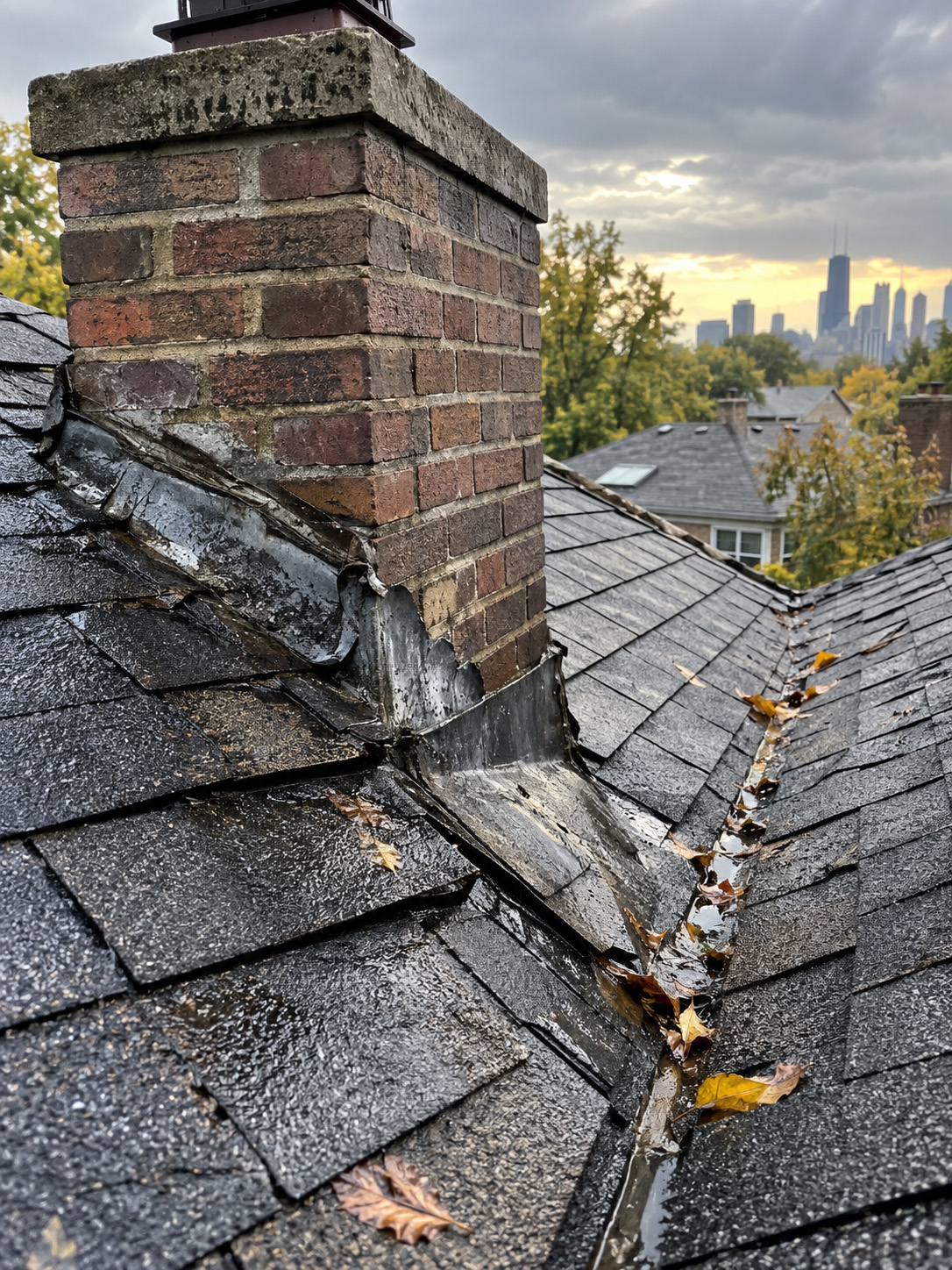
The largest roof surface is not always the most vulnerable area.
Roofs contain transitions and penetrations where different materials meet. These areas deserve special attention after significant wind or rain.
Common areas include:
When severe weather moves through the area, a few practical steps can help protect your home and make the damage easier to evaluate.
Look at ceilings, upper walls, attic spaces, and areas around skylights or chimneys for new moisture.
If water is actively entering the home, move belongings away from the affected area when it is safe to do so.
Walk around the property and look for obvious changes.
Do not climb onto a wet, damaged, icy, or storm-affected roof.
Take photos of visible exterior damage, fallen branches, roofing material on the ground, interior staining, or active leaks.
These photos can also help you compare conditions if the problem changes.
When conditions permit and temporary protection is appropriate, the damaged area may be covered, sealed, or stabilized to reduce additional water entry.
Emergency roof tarping is subject to the type of damage, roof configuration, weather, safe access, and material availability. Call to confirm whether tarping can be provided for your situation.
Once the source and extent of the damage are understood, we explain the repair options. Depending on the roof’s condition, the recommendation may involve localized re
ible damage should be evaluated, but so should new leaks or unusual changes that appear shortly after severe weather.
The sooner the roof is assessed, the sooner you can determine whether the problem requires a small repair, temporary protection, or more extensive work.
pair, replacement of damaged materials, flashing work, membrane repair, or a larger roof-restoration project.
Storm damage does not automatically mean that the entire roof needs to be replaced.
A localized repair may be appropriate when the damage affects a limited area and the remaining roof is in good condition.
For example, repair may make sense when:
More extensive work may need to be considered when:
We evaluate the existing condition before recommending the scope of work.
The purpose of an inspection is not to assume that every storm means a new roof. It is to understand what happened and determine the appropriate solution.
Let us know when the storm occurred and what you have noticed since then. This may include leaks, missing shingles, hail, strong wind, falling branches, unusual roof sounds, or visible exterior damage.
We inspect the relevant roofing areas and look for visible storm damage and related vulnerabilities.
We determine whether the problem appears localized or whether multiple areas require attention.
When repair is practical, we explain the recommended work. If the roof has extensive damage or significant pre-existing deterioration, we can discuss whether a broader solution should be considered.
Damaged roofing components are repaired or replaced according to the agreed project scope.
After repairs are completed, the work area is cleaned and the repaired roofing areas are reviewed.
When bad weather damages your roof, you need a contractor who understands both emergency roofing problems and the different roof systems found throughout Chicago.
JZ Roofing provides storm damage services for pitched, shingle, flat, and low-slope roofing systems throughout Chicago and nearby suburbs.
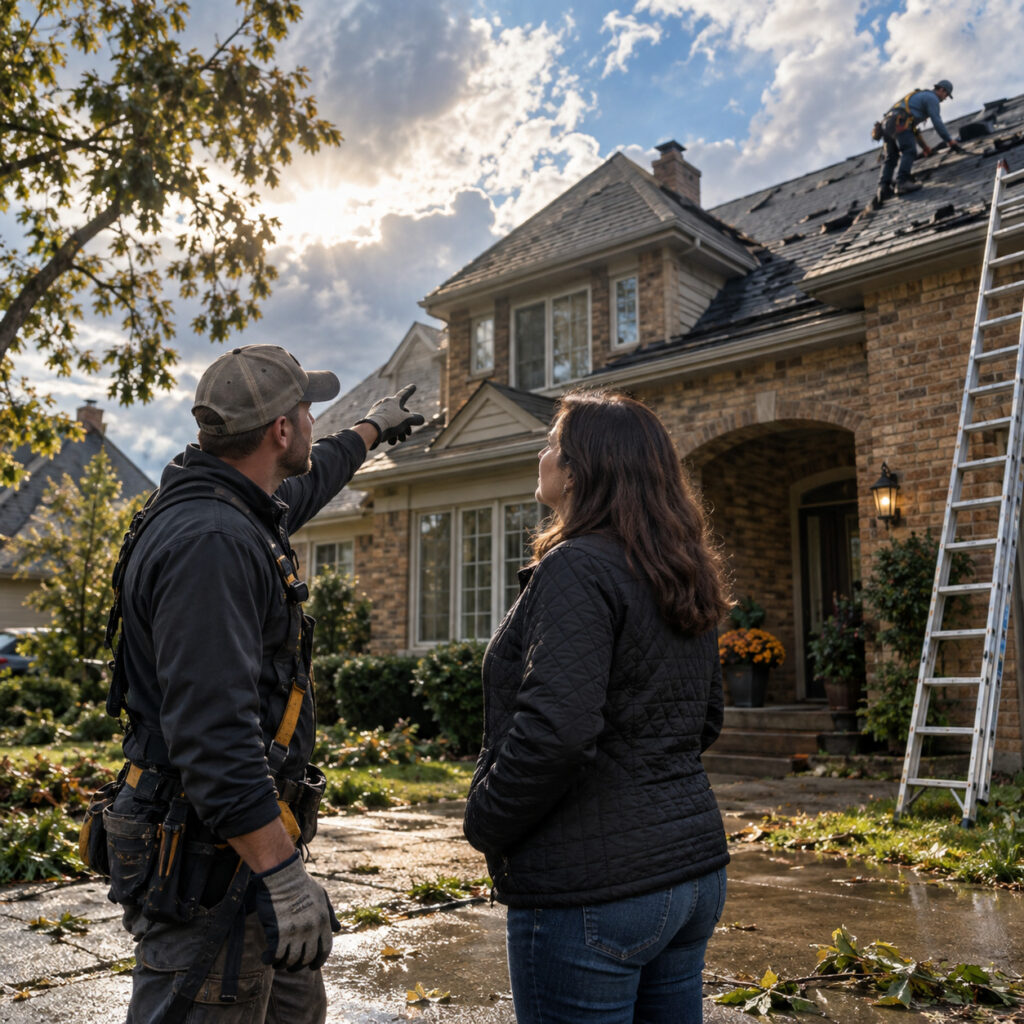
Property owners turn to JZ Roofing for:
We focus on identifying what the storm actually affected and recommending work based on the condition of the roof.
If you notice missing shingles, fallen debris, damaged gutters, active leaking, or new indoor water stains, arrange an evaluation as soon as practical. After unusually severe wind or hail, an inspection may also be worthwhile even if you have not yet noticed a leak.
Yes. Wind may lift, loosen, crease, or weaken shingles while leaving them attached to the roof. Damage can therefore be less obvious than a completely missing shingle.
Hail effects vary with the roofing material and severity of the storm. Asphalt shingles may show impact areas or granule loss, while gutters, vents, flashing, and other metal surfaces may show dents or marks. A roof evaluation can help determine whether the roofing system was affected.
No. A storm-damaged roof may be wet, slippery, unstable, or contain loose materials. You can look for warning signs from the ground and leave roof-level inspection to someone equipped to perform it safely.
Yes. Wind, hail, or debris can damage roofing materials without creating immediate water intrusion. A leak may develop later after additional rain or weather exposure.
Sometimes. Localized damage may be repairable if the surrounding roofing remains in suitable condition. The correct approach depends on how much of the roof was affected and its overall condition.
Yes. Flat and low-slope roofs can experience punctures, membrane damage, open seams, flashing problems, debris accumulation, clogged drainage, and perimeter damage after severe weather.
Protect people and belongings inside the home first. Keep clear of sagging ceilings or electrical hazards, collect water only where it is safe to do so, and contact a roofing contractor. Do not climb onto the roof during severe weather.
No. Some storm damage can be repaired. Replacement may be considered when damage is extensive, affects multiple areas, involves underlying components, or occurs on a roof that was already significantly deteriorated.
JZ Roofing also works with gutters, siding, soffit, fascia, masonry, and related exterior components. If a storm affected more than the roofing surface, those areas can be evaluated as part of the overall project.