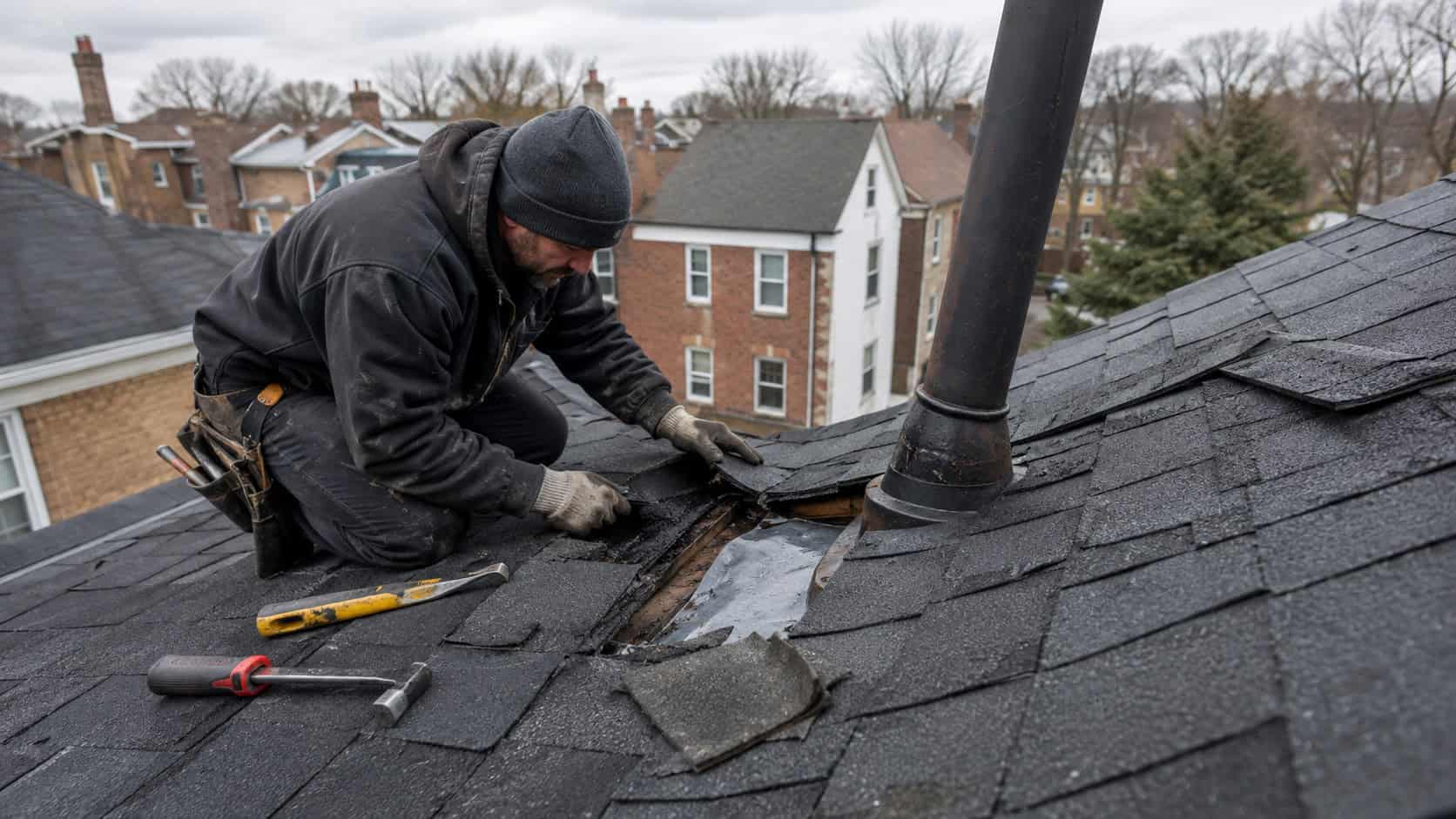
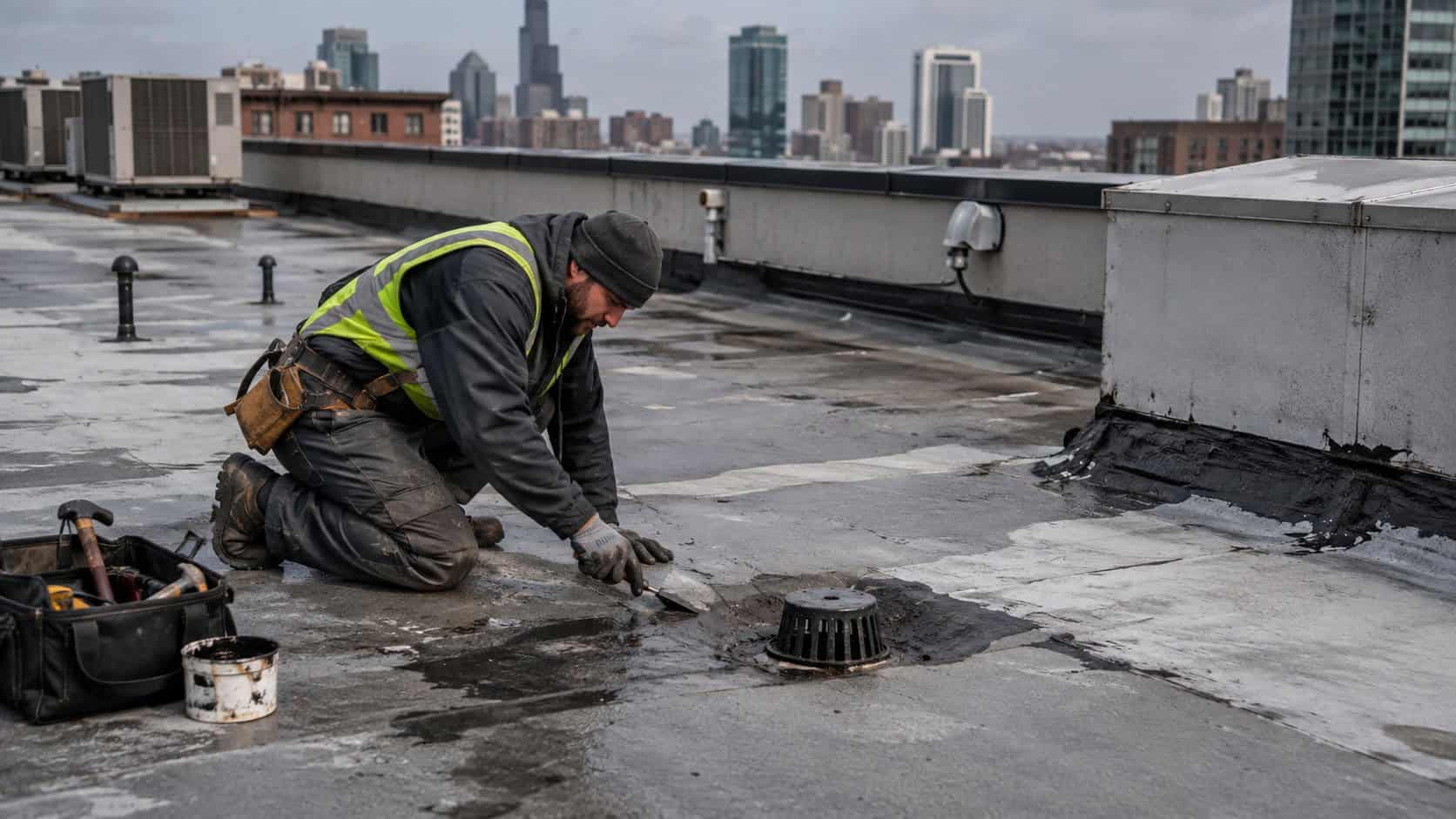
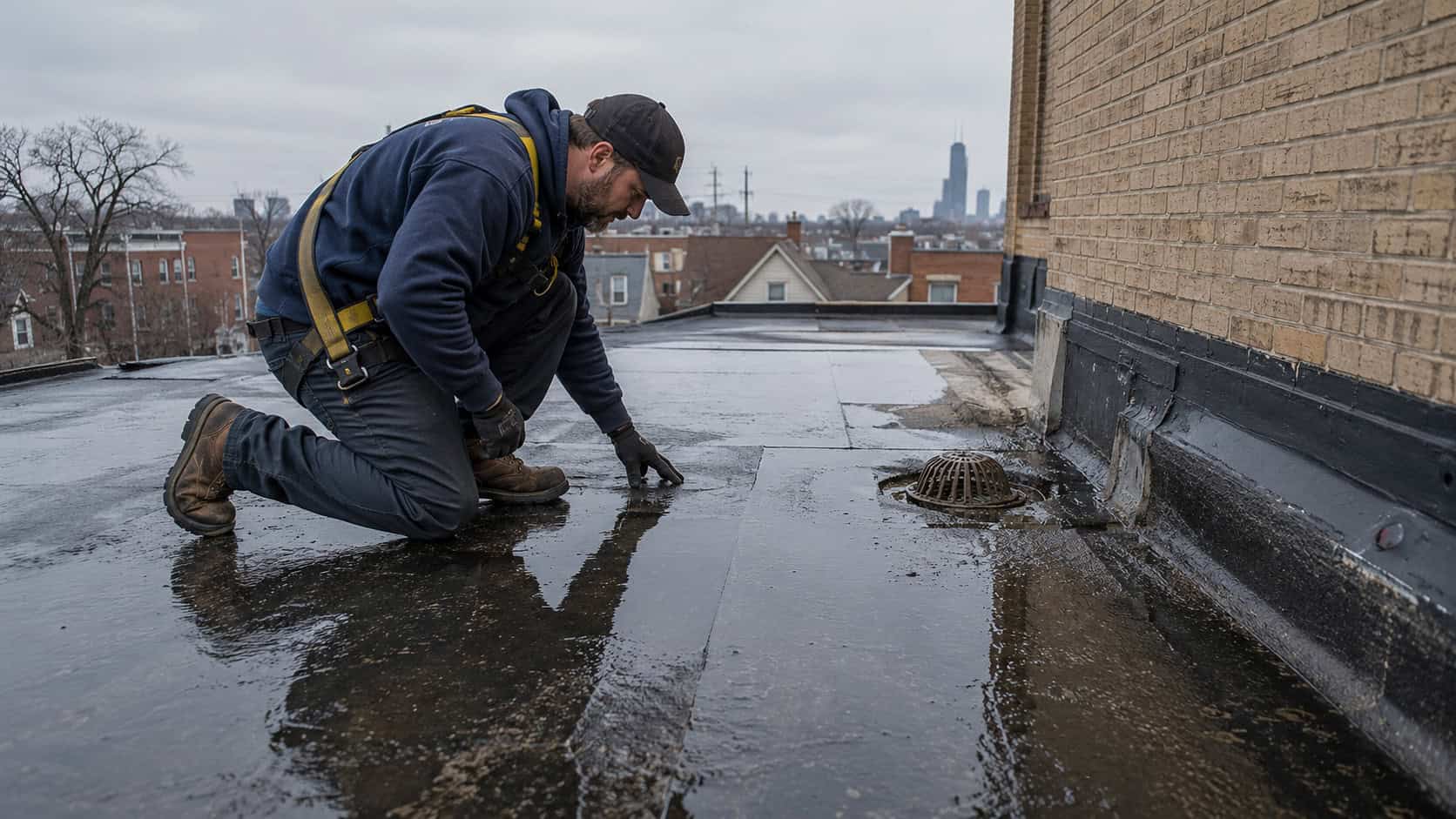
A roof leak is not always easy to diagnose. Water can enter through damaged roofing, flashing, seams, drains, or roof penetrations and travel behind the roof system before appearing on a ceiling or wall.
JZ Roofing provides professional roof-leak diagnosis and repair for homes, multi-family buildings, condominiums, apartment buildings, and commercial properties throughout Chicago and nearby suburbs. We inspect flat roofs, asphalt-shingle roofs, rubber roofing, and commercial roofing systems to identify the cause of water entry and recommend an appropriate repair.
Whether you have a recurring ceiling stain, dripping during heavy rain, or moisture around a chimney, vent, or skylight, our team can evaluate the problem and explain your options.
Some roof leaks create an obvious drip during a storm. Others develop slowly and first appear as staining, dampness, odors, or changes to interior finishes.
Arrange an inspection if you notice:
A stain can remain visible after the roof has dried, so its appearance does not always mean water is entering at that exact moment. However, new staining, expanding discoloration, or recurring moisture should be investigated.
Successful roof-leak repair begins by finding the actual entry point. Covering the visible interior stain or applying sealant without identifying the cause may leave the underlying problem unresolved.
Common leak sources include:
Water does not always travel straight down. After entering the roof, it may follow decking, rafters, insulation, pipes, masonry, or other building components before reaching the interior.
The exterior entry point may be several feet away from the stain. That is why professional leak detection involves tracing the likely water path rather than repairing only the area directly above the visible damage.
Schedule a professional roof evaluation before the leak causes additional damage to insulation, decking, ceilings, or interior finishes.
Roof-leak detection is a process of connecting the interior evidence with conditions on the roof. The goal is not simply to cover an opening – it is to understand how water is entering and determine the repair most likely to correct the problem.
We begin by reviewing where the water appeared and how the leak behaves.
Helpful information includes:
When accessible, the attic or space above the damaged ceiling may provide additional evidence, such as wet insulation, staining, deteriorated decking, or visible water paths.
The roof is examined for visible defects and conditions related to the interior damage.
Depending on the roofing system, the inspection may include:
The interior stain is compared with roof slopes, penetrations, seams, walls, and drainage patterns. This helps identify where water may enter and how it travels through the roof assembly.
A roof may leak because of one isolated defect or several related conditions. For example, water near a chimney may result from flashing failure, deteriorated masonry, damaged roofing, or a combination of problems.
The repair recommendation should address the cause—not only the final location where water becomes visible.
After evaluating the roof, we explain what was found and recommend a focused repair when practical. When the roof has widespread deterioration or repeated failures, we may also discuss whether replacement would provide better long-term value.
The damaged roofing, membrane, flashing, seal, or penetration is repaired using materials and methods appropriate for the existing roof system.
The completed area is inspected to confirm that the repair is properly integrated with the surrounding roofing.
Leak detection and repair methods vary according to the roof’s materials, slope, design, age, and condition. A repair that works on an asphalt-shingle roof may not be appropriate for an EPDM or modified-bitumen roof.
JZ Roofing works with residential and commercial roofing, including shingles, flat roofs, rubber roofing, TPO, EPDM, and modified roofing systems.
Shingle-roof leaks commonly develop around damaged shingles, valleys, flashing, roof-wall intersections, vents, chimneys, skylights, and exposed fasteners.
A focused repair may involve:
Matching existing shingles may depend on the roof’s age, manufacturer, product availability, and color changes caused by weather exposure.
Commercial buildings may have extensive flat-roof areas, multiple drains, mechanical equipment, penetrations, parapet walls, and previous roof modifications. Locating a leak may require examining several possible entry points.
We provide roof-leak evaluation and repair for:
Scheduling and access can be coordinated with property owners, managers, associations, and building representatives.
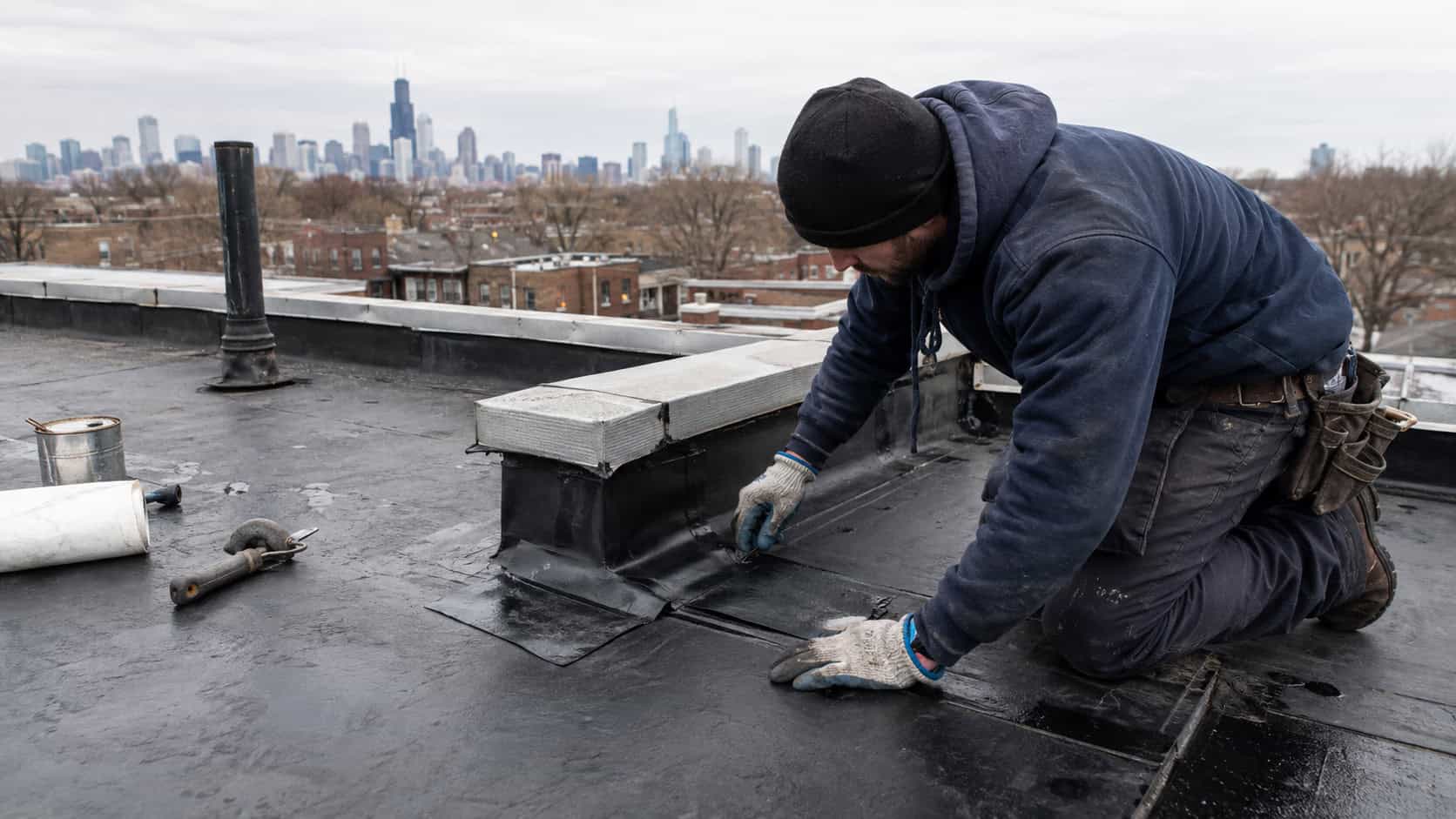
EPDM is a flexible rubber membrane commonly used on flat and low-slope roofs. Leaks can develop at seams, perimeter details, penetrations, patches, drains, and areas damaged by traffic or debris.
Repairs may include:
The surrounding membrane must be evaluated to determine whether it remains suitable for a dependable repair.
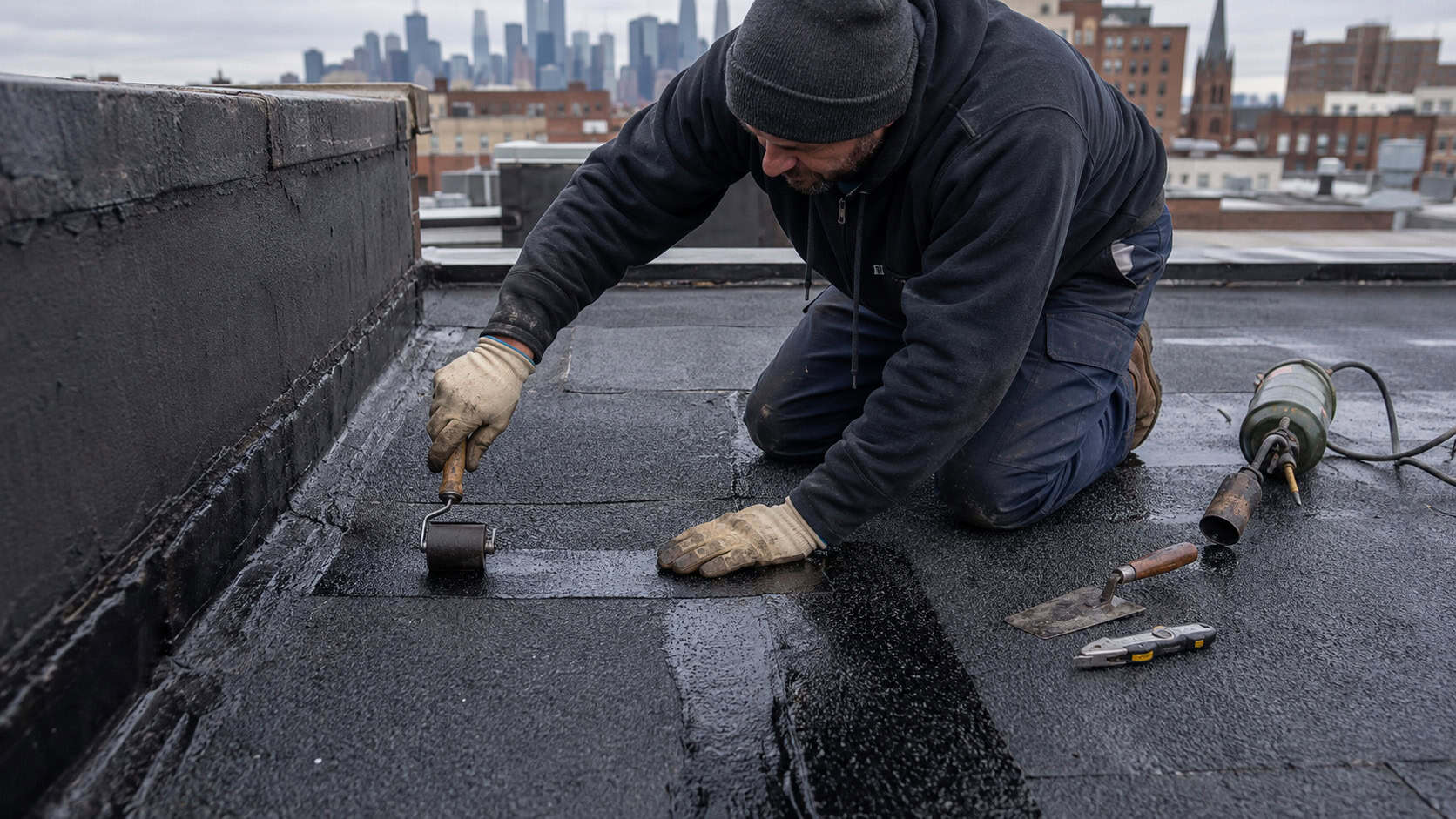
Modified-bitumen systems use reinforced asphalt-based roofing materials installed in sheets or layers. Potential leak sources include open laps, cracks, blisters, punctures, flashing transitions, drains, and deteriorated surface areas.
A repair may involve removing loose or damaged material, preparing the affected surface, installing compatible reinforcing materials, and properly sealing the repair into the existing system.
Large areas of cracking, repeated seam failures, or widespread deterioration may indicate that continued patching is no longer economical.
Flat-roof leaks may result from open seams, punctures, flashing defects, failed penetrations, blocked drains, ponding water, or deteriorated materials.
Because water may travel beneath a flat-roof membrane, the wet interior area may be far from the exterior opening. Inspection should consider drainage patterns and the condition of the entire surrounding roof area.
JZ Roofing’s existing flat-roof service includes inspection and repair for cracked membranes, open seams, drainage problems, ponding water, and deteriorated flashing.
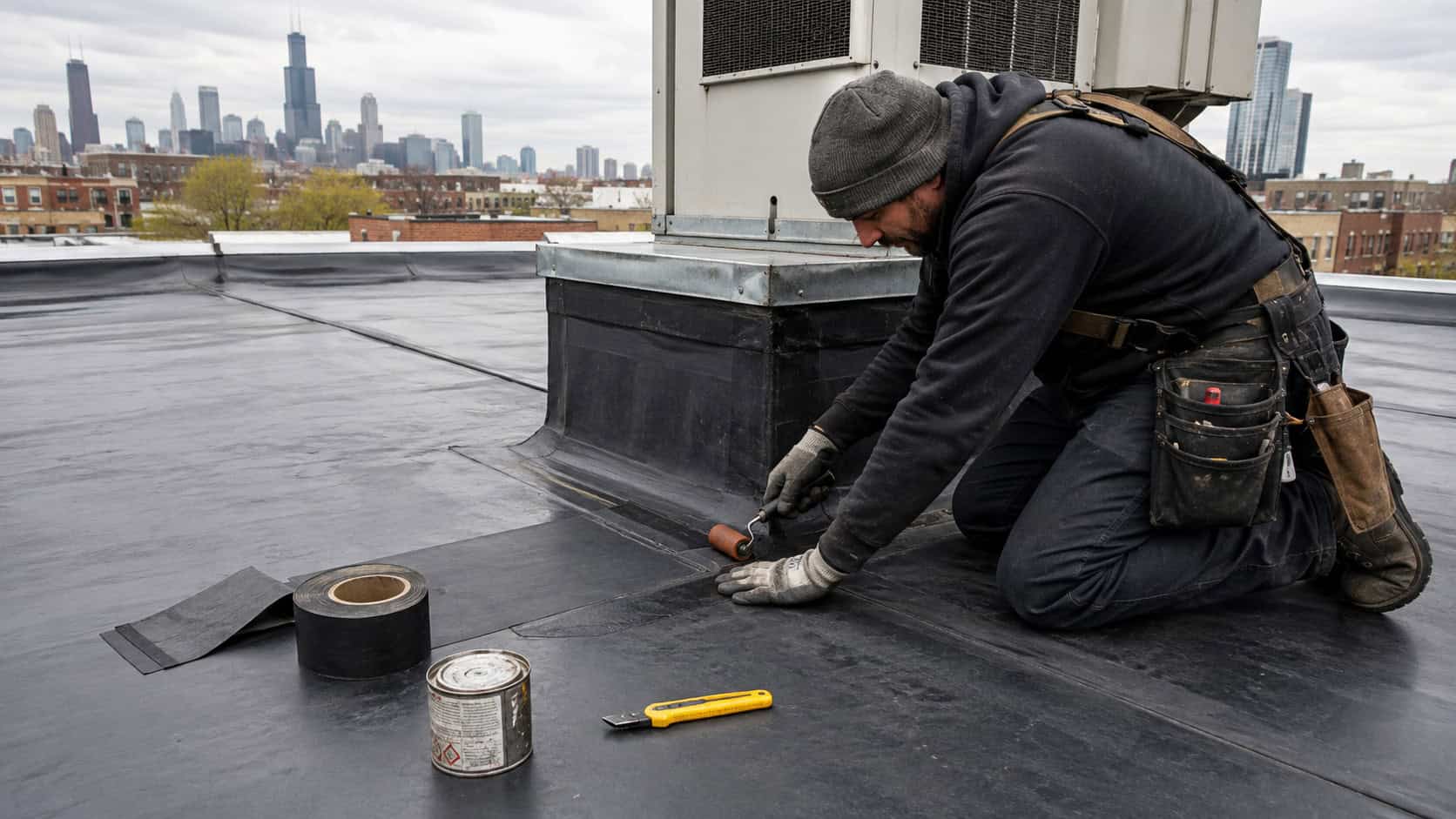
Water around a chimney does not always mean the roofing itself has failed. The source may involve step flashing, counterflashing, chimney caps, mortar joints, masonry, roof-to-wall transitions, or nearby shingles or membrane materials.
Because JZ Roofing provides both roofing and masonry-related services, the surrounding roof and masonry can be considered when evaluating chimney or parapet-wall leaks.
A professional inspection can help locate the source of the leak and determine whether you need a focused repair or a larger roofing solution.
A roof leak does not automatically mean the entire roof must be replaced. Many leaks can be corrected with a focused repair when the surrounding roofing remains in serviceable condition.
A small leak may remain limited for some time, but continued moisture can gradually affect materials below the roof. Prompt diagnosis is generally simpler than waiting until several building components require repair.
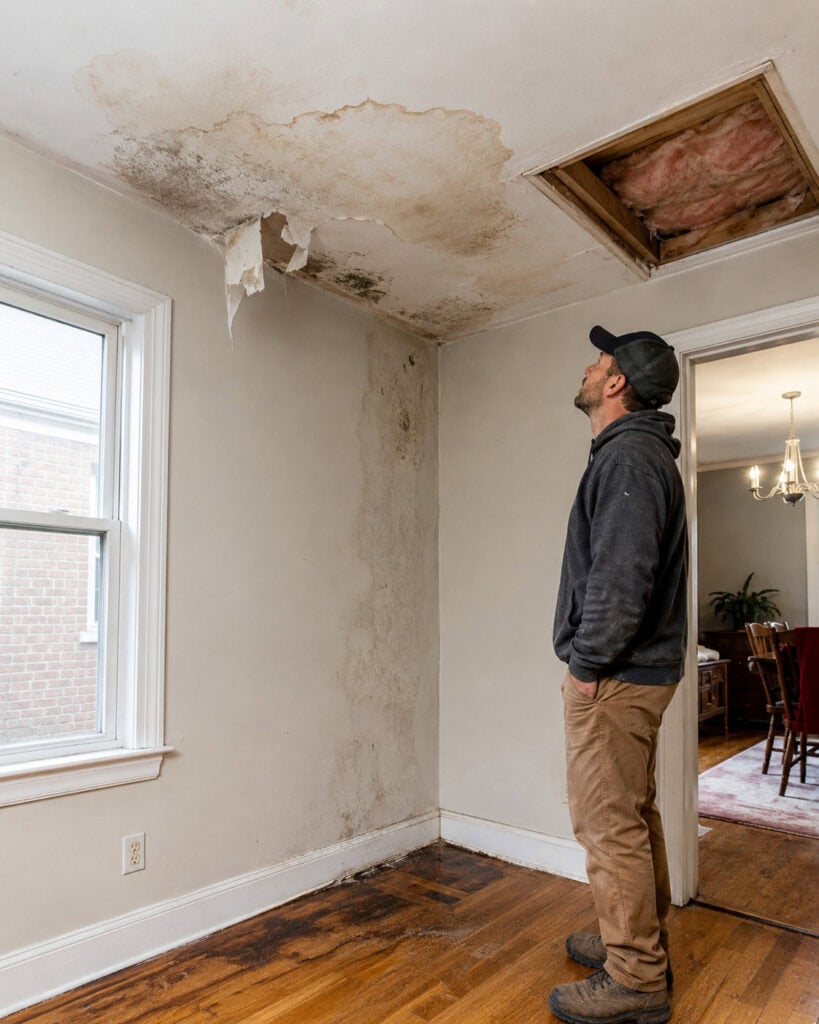
Possible consequences include:
Do not rely on repeated interior patching or layers of sealant without identifying how water is entering the building.
Contact JZ Roofing to schedule a roof evaluation and receive a free roofing estimate.
Roofers compare the location and behavior of the interior moisture with conditions on the roof. They inspect roofing materials, seams, flashing, penetrations, drainage areas, previous repairs, and nearby walls or masonry.
Because water can travel before becoming visible, leak detection often requires tracing the likely path rather than inspecting only the area directly above the stain.
A leak that appears only during heavy rain may involve wind-driven water, overwhelmed drainage, standing water, a small opening that leaks only under greater water volume, or flashing that fails when rain approaches from a particular direction.
Information about wind, rain intensity, and where the water appears can help with diagnosis.
Many flat-roof leaks can be repaired when the damaged area is identifiable and the surrounding roofing remains suitable for repair. Common repairable issues include punctures, open seams, failed flashing, and damaged penetrations.
Replacement may be recommended when deterioration is widespread or leaks repeatedly develop across different roof areas.
Yes, damaged flashing can often be repaired or replaced without replacing the entire roof. The surrounding shingles, membrane, masonry, and roof deck must be inspected to determine the proper scope of work.
A roof leak should be evaluated reasonably soon after it is discovered. A stain that is not actively dripping can still indicate moisture entering the roof assembly.
Call immediately when water is entering rapidly, electrical components are wet, the ceiling is bulging, roofing materials have been removed by a storm, or the structure may be unsafe.
No. One isolated leak may require only a focused repair. Replacement becomes more likely when the roof is old, extensively deteriorated, improperly installed, or experiencing repeated leaks in multiple areas.
An inspection is needed to compare the likely cost and expected value of repair versus replacement.
The cost depends on the roofing system, location of the leak, accessibility, extent of damage, required materials, and whether decking, flashing, masonry, insulation, or multiple roof layers are involved.
An inspection and estimate are necessary because similar interior stains can result from very different exterior problems.
Roof leaks can be evaluated during winter, but available repair methods depend on temperature, snow, ice, moisture, material requirements, and safe roof access.
Temporary protection may sometimes be appropriate until conditions allow a permanent repair. The available options must be determined after reviewing the roof and weather conditions.