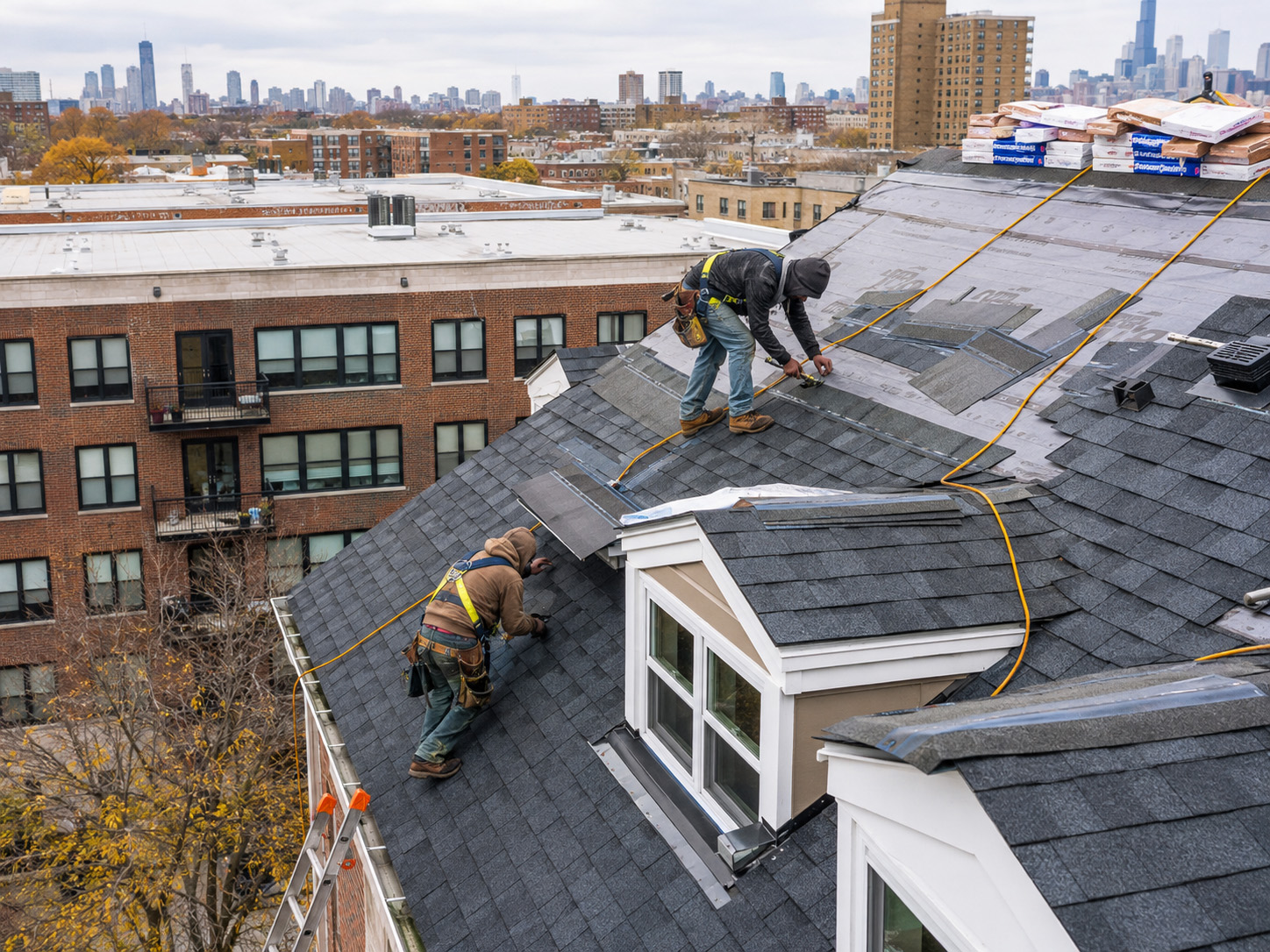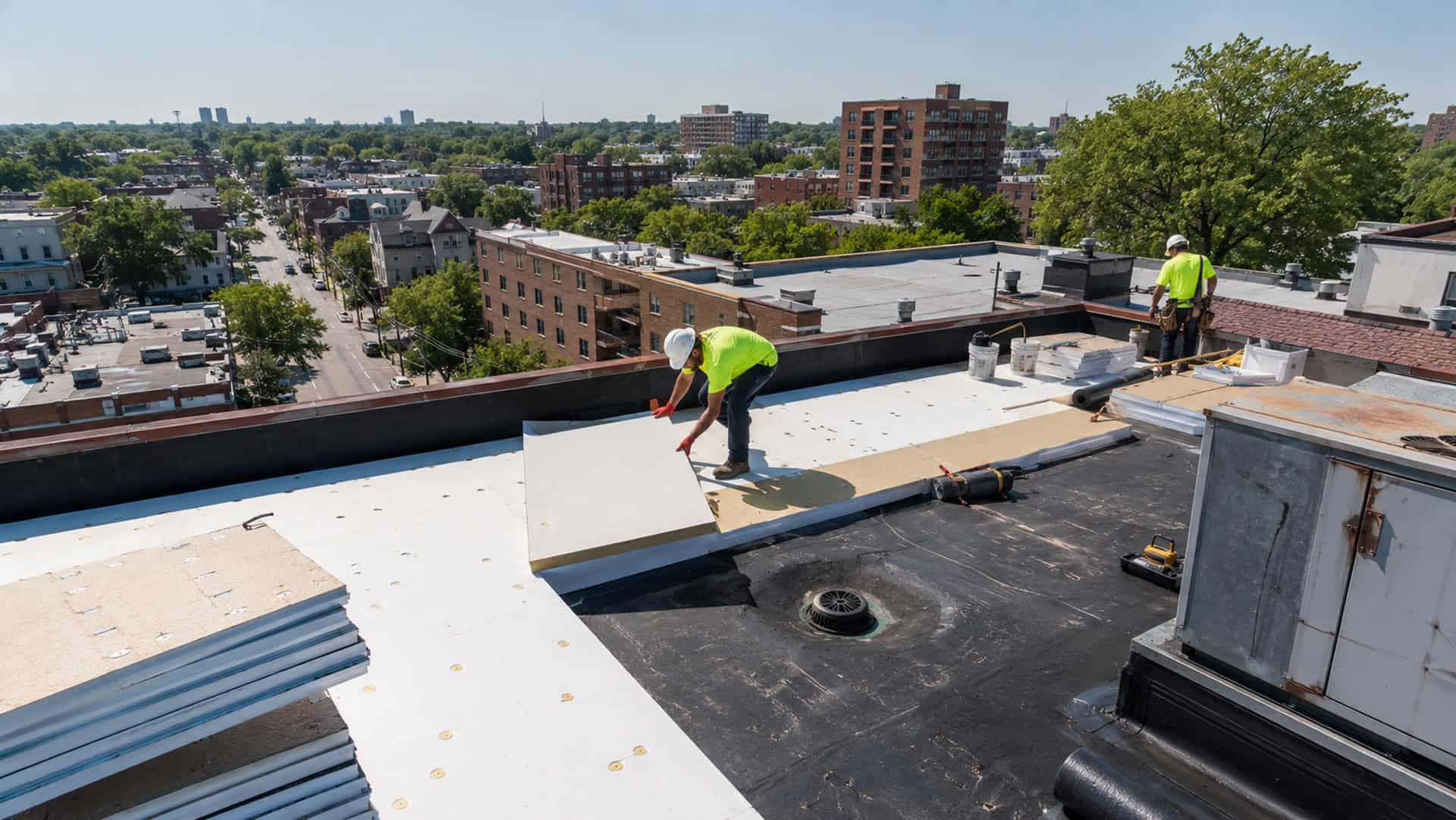
JZ Roofing provides commercial roofing services for businesses, property owners, condominium associations, apartment buildings, and multi-family properties throughout Chicago and nearby suburbs.
Our licensed and insured team repairs, replaces, installs, and maintains flat, low-slope, and pitched roofing systems. Whether you are addressing an active leak, planning a complete roof replacement, or evaluating the condition of an aging commercial roof, we provide practical recommendations based on the property and the roof’s current condition.
Every commercial property presents different roofing, access, drainage, scheduling, and occupant-protection requirements. JZ Roofing works with commercial and multi-unit buildings throughout Chicago and the surrounding suburbs.
Roof leaks and drainage problems can disrupt tenants, damage interior finishes, and affect equipment. We coordinate inspections and roofing work with owners, managers, and building representatives.
Commercial roofing work can be planned around entrances, customer areas, deliveries, and operating hours to reduce unnecessary disruption.
Large flat and low-slope roofs may include extensive membrane areas, roof drains, mechanical equipment, penetrations, and multiple previous repairs. A thorough inspection helps define the appropriate scope of work.
We repair and replace roofs on apartment properties with flat, low-slope, and pitched roofing systems. Work can be coordinated with building owners and property managers to protect occupied units and common areas.
We work with condominium associations, boards, and property managers to document roof conditions, explain available options, and plan repairs or replacements.
Chicago’s multi-family buildings may combine flat roofs, pitched sections, parapet walls, porches, additions, and shared drainage systems. We evaluate how these components work together before recommending repairs.
The existing JZ Roofing flat-roof page identifies schools among the commercial properties served. Project scheduling, access, safety, and occupied areas must be considered during planning.
Mixed-use buildings may combine retail, office, and residential spaces under one roof. We coordinate roofing work around occupants, entrances, deliveries, and daily business operations.
A commercial roof inspection can help identify membrane damage, open seams, flashing defects, drainage problems, failed penetrations, deteriorated repairs, and other conditions that may lead to leaks.
We diagnose leaks affecting flat, low-slope, and pitched roofs. Because water can travel beneath roofing materials, the source may not be directly above the interior stain.
Storm damage, active leaks, displaced roofing, damaged flashing, and fallen debris may require urgent attention. Emergency requests are evaluated based on severity, weather, safe access, and current crew availability.
Scheduled maintenance helps address small defects before they develop into more disruptive leaks. Maintenance may include inspections, cleaning, sealing, and review of seams, flashing, penetrations, drains, and roof edges.
We address punctures, damaged membranes, open seams, blistering, deteriorated flashing, ponding water, and drainage-related concerns on commercial flat roofs.
Replacement may be appropriate when a roof is extensively deteriorated, has widespread moisture damage, or has required repeated repairs in multiple areas.
JZ Roofing installs roofing systems for new construction, additions, property improvements, and complete roof replacement projects.
Commercial roofs often contain drains, vents, pipes, HVAC supports, curbs, hatches, skylights, and other penetrations. Each transition must be properly integrated into the roofing system.
Standing water may result from blocked drains, damaged scuppers, settled insulation, poor slope, or an improperly configured drainage system. We evaluate both the water accumulation and the condition of the surrounding roof.
When replacement requires removal of the existing roof, the exposed deck can be evaluated for moisture damage or deterioration. Necessary repairs should be completed before the new roofing system is installed.
Schedule an evaluation before the problem disrupts tenants, customers, employees, inventory, or building operations.
The correct commercial roofing system depends on roof slope, building use, drainage, existing construction, equipment placement, budget, and long-term ownership plans.
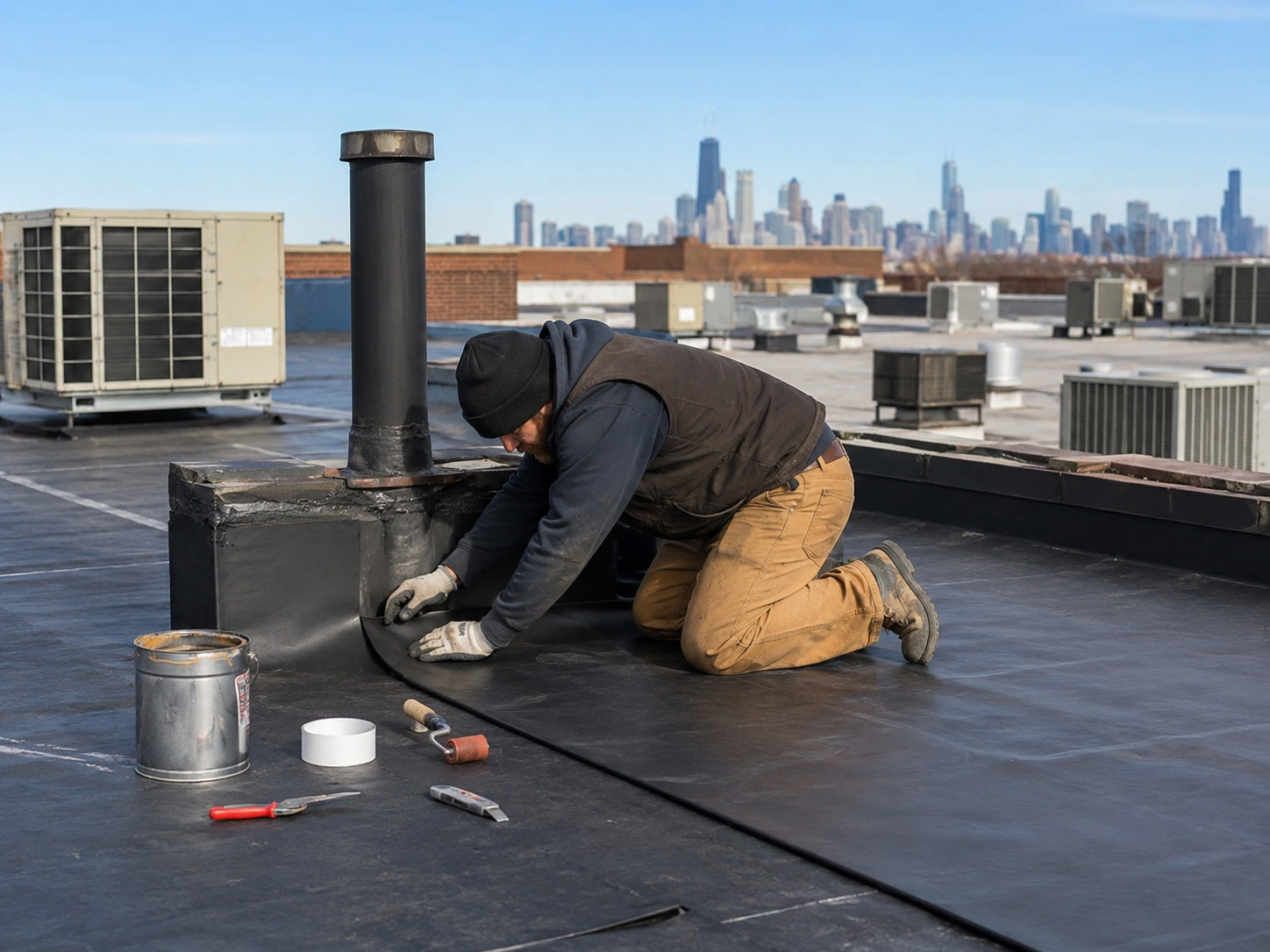
EPDM is a flexible rubber membrane commonly used on commercial flat and low-slope roofs. It can provide dependable waterproofing when seams, penetrations, perimeter details, and drainage components are installed and maintained correctly.
EPDM services may include:
The surrounding membrane must be evaluated before deciding whether a localized repair will provide a dependable result.
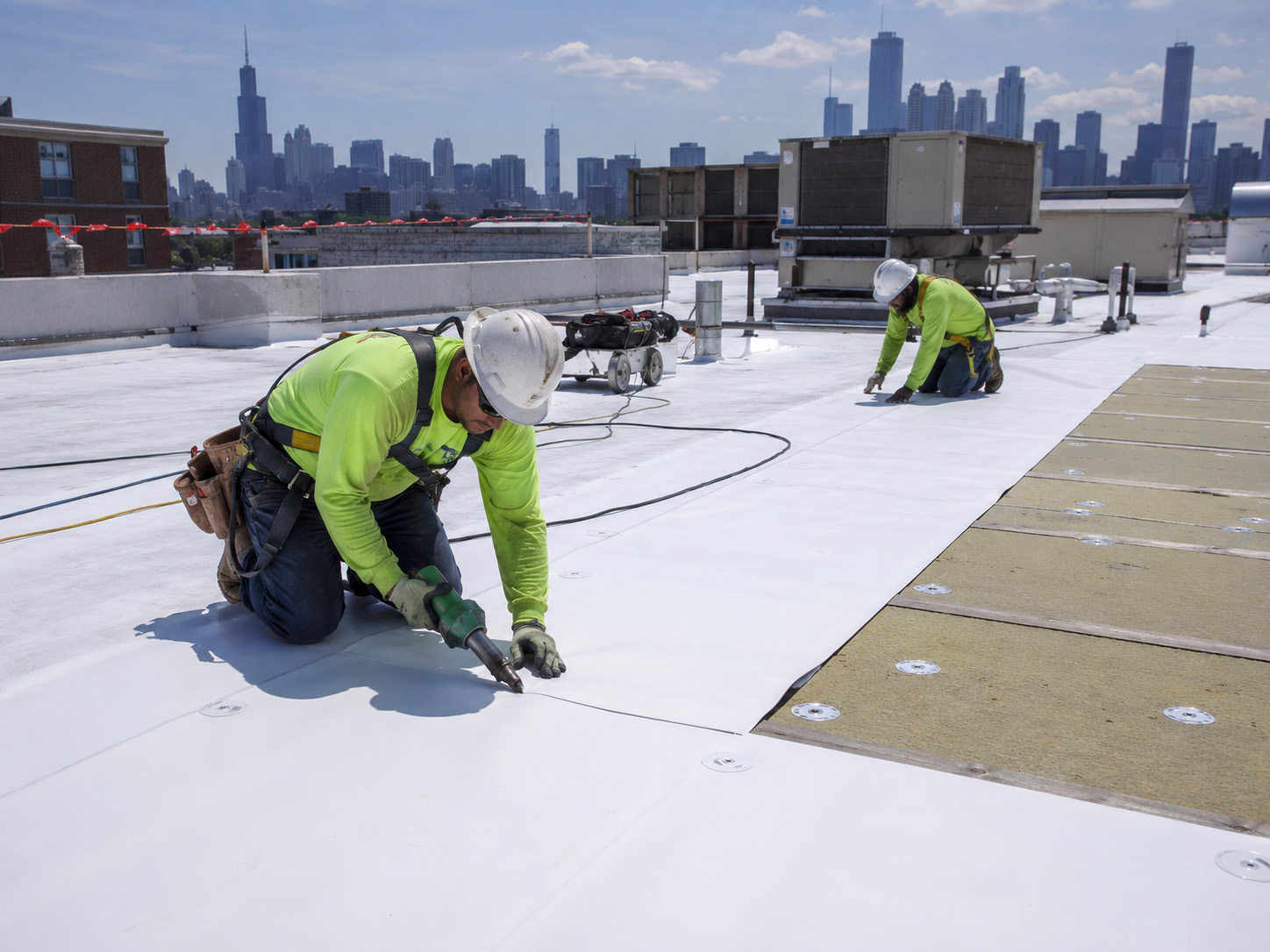
TPO is a single-ply membrane system used on many commercial and multi-unit properties. Seams are joined to create a continuous roofing surface, while penetrations, curbs, edges, and drains require carefully completed details.
TPO roofing services may include:
Material selection and installation specifications should be based on the building and the approved roofing design.
Not every commercial or multi-family building has a flat roof. Apartment buildings, condominium properties, offices, and mixed residential-commercial structures may include pitched asphalt-shingle roofs.
Our shingle roofing services include:
The surrounding membrane must be evaluated to determine whether it remains suitable for a dependable repair.
We discuss the reported problem, building use, access requirements, roof history, known leaks, and previous work before evaluating the roofing system.
Visible concerns can be documented through notes and photographs, including:
We explain the observed conditions and provide an estimate for the recommended repair, replacement, or installation work.
When more than one practical option exists, the estimate can distinguish between a limited repair and a longer-term roofing solution.
Before work begins, we coordinate:
The approved work is completed using materials and methods appropriate for the existing roof and agreed project scope.
Debris and unused materials are removed from the work area. The completed roofing work is reviewed before project closeout.
Applicable workmanship and material warranty information should be explained for the specific project. Owners and managers should also receive guidance about inspections, drainage, and future maintenance.
Receive a clear evaluation and estimate for commercial roof repair, replacement, maintenance, or new installation.
JZ Roofing has served Chicago’s residential, multi-family, condominium, apartment, and commercial markets for nearly four decades. The company is licensed and insured and works with flat, low-slope, rubber, TPO, and asphalt-shingle roofing.
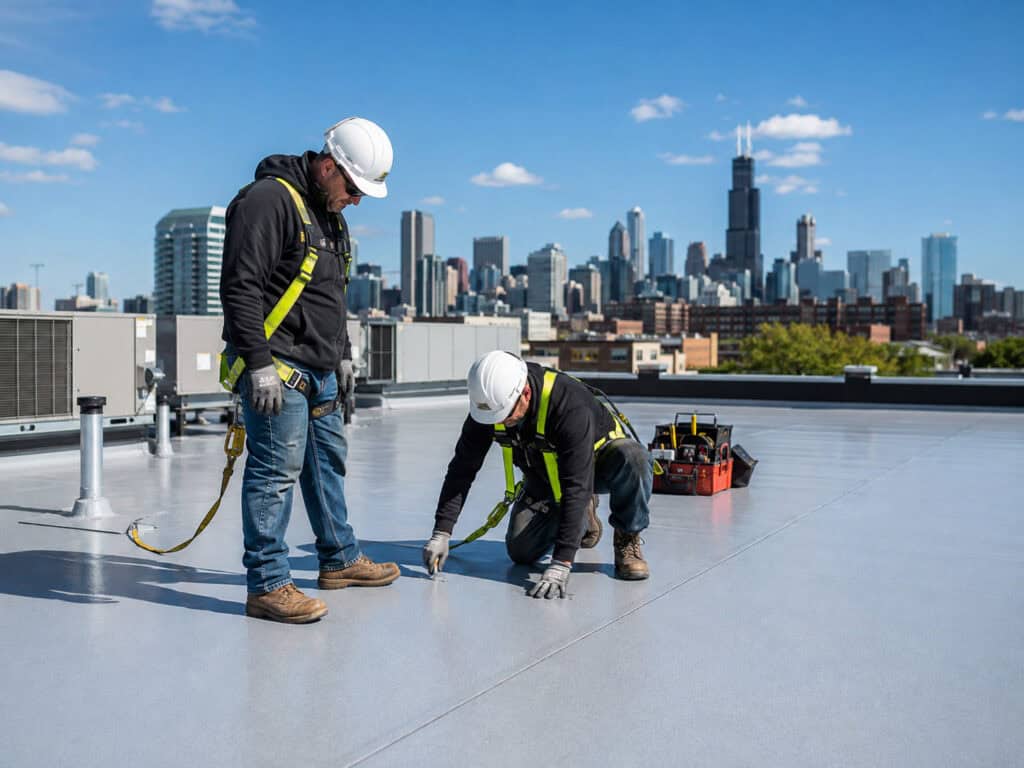
We work with roofing systems commonly used on Chicago commercial and multi-unit properties, including EPDM rubber roofing, TPO roofing, flat and low-slope roofing, and asphalt shingles for pitched roof sections. The appropriate system depends on the building design, roof slope, drainage, existing construction, budget, and expected service life.
Yes. A commercial roof can often be repaired when the damage is limited and the surrounding membrane, insulation, flashing, and roof deck remain in serviceable condition. Repairs may include sealing open seams, patching punctures, correcting flashing, repairing penetrations, or addressing drainage problems.
Replacement may be more practical when deterioration is widespread, insulation is wet, leaks occur in multiple areas, or previous repairs are no longer effective.
Project duration depends on the roof size, roofing system, number of existing layers, required deck repairs, building access, weather, and project complexity.
A smaller commercial roof may take several days, while a large or complicated property may require more time. The expected schedule is explained after the roof has been inspected and the full scope of work has been established.
In many cases, tenants, employees, and customers can remain in the building while roofing work is completed. The project must be planned around entrances, deliveries, occupied areas, noise, equipment placement, and other safety considerations.
We coordinate access and scheduling with the property owner, manager, or building representative to reduce disruption whenever practical.
Most commercial roofs should be inspected at least once or twice a year and after major storms, strong winds, hail, heavy snow, or unusual weather events.
Older roofs, buildings with previous leaks, and roofs with numerous drains, seams, penetrations, or mechanical units may require more frequent attention. Regular inspections help identify small defects before they develop into larger leaks.
Yes. We provide roof inspection, leak repair, maintenance, replacement, and installation services for apartment buildings, condominium properties, and other multi-family buildings.
We can coordinate the work with property managers, condominium boards, building owners, tenants, and maintenance personnel.
Yes, urgent commercial roofing problems can be evaluated when an active leak, storm damage, displaced roofing material, damaged flashing, or fallen debris threatens the property.
Response time depends on current crew availability, weather, travel conditions, roof access, and whether the work can be performed safely. Temporary protection may be recommended when a permanent repair cannot be completed immediately.
Warranty coverage depends on the roofing system, materials, manufacturer requirements, installation specifications, and project scope.
The written proposal should clearly identify any applicable workmanship warranty and manufacturer material warranty. Warranty length and coverage can vary, so the specific terms should be reviewed before the project begins.